Showing posts with label Blog. Show all posts

Wednesday, October 2, 2019

10 Questions to ask before getting into Marketing

4 Minute Blog:
Best questions to ask before choosing a career in Marketing


"Should I get into Marketing?" 


Ask yourself the questions below if you are considering a Career change anytime in the future. 


These Questions are designed for YOU to figure out "What" Marketing actually is in today's business environment, AND if Marketing would be a good, possible Career choice for YOU in the future, based on the new information you learn by asking these questions.


I did not include the answers, because I want people who are serious about their lives to do the proper research and figure out for themselves, if something is good or bad.


I wrote this complimentary blog.
I have done my part by providing a neat and consolidated list of questions for people who seek a career in Business and Marketing. 


Do YOUR PART if you are the job seeker.

Research. Ask questions. 


Do it happily.
The journey is the FUN part.
The questions below are a great start for you!


After you have taken the proper time to smartly answer the questions below, by typing it out, or writing your answers on paper (in your head does not count) You should create your own list of questions and ask the right people for the answers. 


Your questions should be more in depth information about the Marketing field, or you can be inspired to start creating lists for different Career fields that you may wish to explore in the future.


Did you know that you can go on job interviews for your "Dream Job" while you are still employed, at your job that sucks?


It's true!
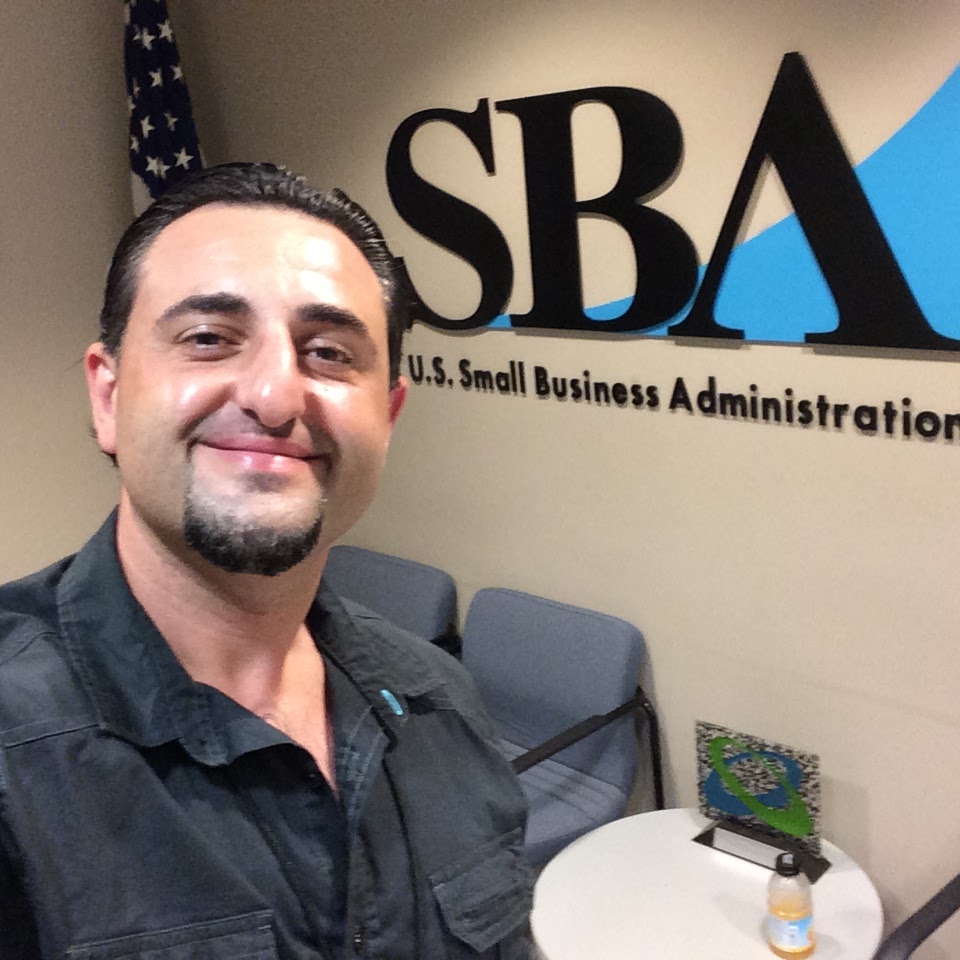


You should create an exit strategy, while you have the stability of a "job" until you find something else that makes you happy.


Me: You're willing to work hard, right?  
You: Yes.


Me: Why not work hard, and be HAPPY?  

You: Hmmm... Oh yeah George, You're right!


Did you know that

It is possible to find 
work that you 
will love to do?  


It IS Possible!


Other people do it everyday.  


You can create a plan of your goals, start  looking for a fun and challenging "side hustle" that makes you happy, then just do it. 


Go for it. 


Start doing that "thing" that 

you said you wanted
 to "try" someday....  



There is No "try" if 

you are already "DOing" 
your thing. 


Choose your THING. 

Do your THING.


Take a baby step to get started. 

Just take a step.


Move forward toward 

something that you know is yours. 


You deserve the best. 


You will create a way 
to get what you want!


Best 10 questions to ask 

before choosing a career 
in Marketing:


(*Actually it's more than
 10 Questions to help you...)


What is My idea of Marketing?


1)  Who must use Marketing?


2)  What does a Marketer do?


3)  What does Marketing do for a product, service, or company?


Is Digital Marketing the same as Traditional Marketing?


4)  How can a person become a Marketing Specialist?


5)  If a person is a Marketer, are they a Salesperson too?


What is my definition of Marketing?


Would Marketing be a good fit for people who want part-time work?


6)  Does Marketing do the same thing as Branding?


Is a Marketing career a good choice for Veterans and their families?


7)  What type of Experience do you need to become a Marketing Consultant?


Why is Marketing an important part of the Business cycle?


8)  Do I need to be a Computer genius to do online Marketing?


9)  Do most people earn a good living wage working in the Marketing field?


10)  Is a College degree required to get into Marketing?


Very Respectfully,


George Ohan
U.S. Army Veteran
Marketing Consultant


Please let me know if I can help you with any questions that you may have about Marketing. Joining the business, public speaking, marketing services, consultation, training, education, and workshops.


Contact me, so we can set up a time, and Let's Talk!


Let's stay connected please:

https://fultonfilmcompany.com/contact


Fulton Film Company on Facebook:
https://www.facebook.com/fultonfilmcompany/


------------------------***
ONLY for serious Business people
and serious inquiries:
------------------------***

Take a look below.

See something interesting?

------------------------------
/ Marketing / Sponsorship / Branding
/ Investment / Opportunities / Swag Bag
------------------------------


Asian World Film Festival: Sponsorships Needed
https://asianworldfilmfest.org/


Brothers At War Resiliency: Investors Needed
https://brothersatwarresiliency.com/


G.I. Film Festival: Sponsorships Needed
https://gifilmfestival.com/


It's worth a click or two, 
to find out what you can be a part of....

Let's talk!

^^^These are HUGE opportunities....^^^

Wednesday, June 26, 2013

Develop a pitch for your script - Sell your idea in Hollywood

ALL CREDIT FOR THIS ARTICLE TO: Stephanie Palmer


Instagram- georgeohan

How To Develop A Pitch For Your Screenplay: A Case Study


By Stephanie Palmer
 
Would you like to see how a pitch gets developed for a screenplay?
A screenwriting client of mine gave me permission to use his project as an example.
What you’re about to see is the first phase of researching and developing a pitch, using my client’s feature film idea as a case study. This process will not only help you to improve your pitch; it will also build your expertise in the genre so that you are the kind of writer executives want to hire.

Step 1: Draft The Initial Short Pitch

If you already have a short pitch, great. If not, try the following formula with five elements:
“My story is a (genre) called (title) about (hero) who wants (goal) despite (obstacle).”
I like starting with this formula because it forces the clarification of the dramatic conflict. Typically, a story that is clear can be framed in terms of an entity (the hero) that is seeking something (the goal) despite some significant problem (the obstacle).
Our goal is to clarify the five elements and make them more compelling. This means that the changes we make may seem small (e.g., exchanging one word for another), but they will have large implications because we’re working at the DNA-level of the story.
Using the formula, here’s my client’s initial pitch:
It’s a comedy called Nerd Ops about the National Security Administration’s nerdiest technical people who must become field operatives to save the world from a terrorist hacker organization.”

Step 2: Identify Possible Genres

Genre gives context to the project, suggests a structure for the story, and has implications for budget, scope, and potential revenue. The 1-2 words you use to categorize your project, therefore, should be chosen with care.
For Nerd Ops, is “comedy” the best description of genre? Could we find something more specific?
You may already know how your project should be categorized. If not, here’s a way to generate ideas for genre descriptions:
  • Go to boxofficemojo.com;
  • Look for produced projects that are the most like your idea;
  • See how they are classified.
Using this strategy, and given the core concept of nerdy technicians becoming field operatives, here are some possible genres:
  • Dark comedy
  • Buddy comedy
  • Action comedy
  • Spy comedy

Step 3: Identify Themes

While I do believe that it’s important for a finished project to have one core thematic premise, at this stage we’re interested in looking at themes more broadly.
Here are some themes that I could see being relevant:
  • Weaknesses can be strengths (and strengths weaknesses)
  • Warriors for the 21st century
  • The brotherhood (and sisterhood) of geekdom
  • Humans vs. machines

Step 4: Identify Structural Elements

Structural elements are aspects of the project which are obvious and relevant but which you don’t want to classify as themes.
Some structural elements of this story could be:
  • The culture of elite hackers
  • The NSA recruiting process
  • “Hell Week” training
  • Powerful supercomputers

Step 5: Brainstorm Comparisons

Now, using the genres, themes, and structural elements as a starting point, let’s generate more projects to which Nerd Ops could be compared:
  • Spies Like Us (Dan Ackroyd’s character is a technical genius)
  • Hackers (elite hackers work together)
  • Stripes (oddballs in the military)
  • Mission Impossible 3&4 (technical geek played by Simon Pegg)
  • The Recruit (Colin Farrell’s character is a math genius)
  • GI Jane (the structure of “Hell Week”)
  • The Other Guys (desk jockey cops become field agents)

Step 6: Build A Table To Hold Comparison Data

What we’re going to do now is build a chart full of data. Along the way, we’re going to get ideas for more comparison projects and we’ll add those to the chart.
First, set up a table with twenty rows and nine columns. Those nine columns should read: Title, Genre, Rating, Release Date, Buyer/Distributor, Domestic Box Office (DBO), International Box Office (IBO), Total Box Office (TBO), Pitch.
Second, open two websites: boxofficemojo.com and netflix.com. If you’re not already a Netflix member, you can get a trial membership.

Step 7: Fill In The Table

First, I’ll search boxofficemojo.com for Spies Like Us. I’ll enter the data in my table, then click on the tab for “Similar Movies.” This shows me that there’s a project called This Means War that I hadn’t considered. So I’ll click on that and enter the data. Then, I’ll click on the tab for “Similar Movies,” and repeat the process.
Second, I’ll go to netflix.com and look for the summaries. I highlight them, edit if needed, paste into a text file, then cut and paste into my table.
Third, I’ll click on the genres in boxofficemojo.com that I’m interested in and see what other comparable projects I can find.
Sometimes boxofficemojo.com, netflix.com (or IMDB or Wikipedia) don’t agree on the genre. For example, a comparison project in my table is Knight and Day. Boxofficemojo calls it a comedy; netflix calls it an action comedy. I think it’s an action comedy, but like This Means War, could also be classified as a romantic comedy.
Use the genre and pitch that you think best. The important thing is to collect the data in one place so you can look for patterns.
After poking around in the boxofficemojo and netflix databases, my table looks like this: Good in a Room Nerd Ops Research Example

Step 8: Sort The Table And Look For Patterns

Now, sort the table by clicking on the column for Total Box Office and sort the table with the highest grossing projects at the top.
The point is not to be a slave to the box office and to copy exactly movies that have been successful. Rather, it’s to have the same information that the decision-maker has, and to be able to customize your pitch using that information to showcase what’s original about your project in a way that is compelling to the listener.
Looking at our table, we can start to see patterns:
  • It seems that Nerd Ops would be more clearly described as an action comedy rather than a spy comedy (e.g. Austin Powers, Bean).
  • The top grossing action comedies are either romantic comedies or buddy pics (e.g., Knight and Day, Rush Hour, The Other Guys)
  • Characters who are “desk-jockeys” or “prodigies.”
  • Two male heroes.
  • A PG-13 rating.
  • Titles with 2-3 words.

Step 9: Improve Your Pitch

Now that I’ve done some research and identified patterns, I can change the short pitch and come up with new pitch material.
Here’s the old short pitch, then the new one:
Old:
It’s a comedy called Nerd Ops about the National Security Administration’s nerdiest technical people who must become field operatives to save the world from a terrorist hacker organization.”
New (changes in bold):
It’s an action comedy called Nerd Ops about two competing National Security Administration computer prodigies who must become field operatives and work together to save the world from a terrorist hacker organization.”

Step 10: Test Your New Pitch

At this point, I would begin testing this short pitch to see how I can sharpen and improve the core concept.

Monday, August 13, 2012

USMC - I would've been a Marine, but I was too FAT

My father was from Syria and my mother was from Lebanon and they decided on moving to the jungle of the United States of America in 1981; Los Angeles.  Years later we had moved 4 hours north to Madera, CA.   I was 16 years old and it was my junior year of high school.  This was the first time that I had realized there was life after graduation.  As I started to pay attention to what was going on around me I noticed a bunch of students getting ready for college.  My parents had never told me about college; how would they know what it was like to get into an American college?  After all, they were Armenian immigrants.    One thing was certain my family LOVED the United States and felt very American.

I drove to the Marine Corps recruiting office in Fresno, CA and ran into two interesting characters.  One man was Sergeant Vernon and the other one was Gunnery Sergeant Gorsky.  Now, mind you..... I was interested in the Marine Corps because I had heard about 1,000 helicopter pilot stories from my friend's dad; Captain Terry Lewis.  He had encouraged me and motivated me about the American military.  When I walked into the USMC recruiting station I heard,"Ahhhh shit!" Then they started laughing quietly.  I walked further into the recruiting station and I heard,"Wassup my man, Ahahahaha..... Ya man, right here."  Sergeant Vernon was pointing at the weight scale while Gunnery Sergeant Gorsky chimed in with,"You're probably gonna be too fat, but I'll get down your basic info anyways."  He asked many random questions, like my address, phone number, and medical history......but he never asked me my name.

These comments had not bothered me in the least bit.  I was just surprised that the Marines weren't super human like I had been taught.  This was my first time having any interaction with Marines, besides from the neighborhood heroes.  I immediately started to assess my situation and decided that this is not the type of people I want to be around.  Sergeant Vernon spoke as if he was an announcer with a drum roll from Gunnery Sergeant Gorsky,"Twoooooo Hundreeeeeeeed and Thirt Teeeeeeee Fiiiiivvveee pounds!!!!"  I put my shoes back on and without uttering a word I slowly walked out of their office and looked toward the other recruiting stations.  It was 9:00pm and the other stations were already shut down for the evening so I went to Taco Bell and stuffed my fat face before going home.

While I was at home the remarks of the recruiters started to bother me.  I knew I was fat.  I knew I needed help.  I knew I wasn't ready to be a Marine, that's why I was there........and my fu*kin name is George Ohan sir.  At 11:15pm I heard a knock at my door at home and when I answered it Sergeant Vernon stood there with a packet of paperwork in his hands ready to be filled out.  I did not invite him in because I was confused of his arrival.  He told us that the USMC had opened up a few slots with weight waivers, blah, blah, blah.  He started getting very aggressive and rude.  A few minutes later my father asked him to leave and Sergeant Vernon said in a very stern voice,"Sir you need to understand that this is America and this is how the system is.  He needs to come with me to Sacramento tonight."  Sergeant Vernon would rather have me go to the Military Entrance Processing Station and fail the height and weight requirements than to disqualify me as an applicant.  Needless to say, my father was not happy and kicked him out of our home.

The next day I went to the Army recruiting station and came across a Soldier by the name of Staff Sergeant Shenefelt.  I'm not going to say he was the best guy or Soldier in the world, but I can say that he took the time to help me.   I walked into the recruiting station and before he asked me any questions about weight, medical, or law violations he asked about my interests and educational goals.  He KNEW I was fat, just like I did.  He also knew to look past that for a moment.  By the time the meeting was done we had put together a workout plan and assessed that I had to lose 65 pounds to qualify for the Army.   I showed up the next afternoon after school and he took me for a run that nearly killed me.  It was just what I needed.

I lost the weight.  I joined the Army.  All I needed was some motivation from a LEADER outside of my family or close circle of friends.  If you are a person in a power position it is imperative to always be the LEADER.  It took a 10 minute conversation for an Army recruiter to recognize my potential and he gave me a shot.  I strived in the military to be named as "Top Soldier" on many occasions and went on to earn numerous awards and commendations while serving active duty in the U.S. Army.  I had also reached the rank of Staff Sergeant (P) promotable before deciding to become a civilian again.

The point I'd like to make is that I did not let the actions of a couple of people that were not representing the Marine Corps the way they should've been determine my future path.  My reactions to their less than honorable behavior is what set the tone to my future success.  I KNEW I was fat, that's why I went to the Marines......for help.  If someone comes to you and expresses a need, it's probably true and worth further investigation.  This can apply for any situation.  Sometimes people just want to talk.  Someone may suffer from PTSD, low self-esteem, depression, etc... If they're reaching out to you please be a friend, be a mentor, be a leader.......just be there.

Sergeant Vernon and Gunnery Sergeant Gorsky, You were right.  My weight prevented me from wearing the same uniform as you.  No hard feelings though.  I served this country honorably for eight years active duty as an Army Soldier and I feel very privileged for having an opportunity to do that.  Currently I help ALL military branches find work in the Film & Television field through an organization called Vets on Set.  I am also the alumni president for veterans at Los Angeles Film School.  Oh ya, I also belong to a group called Veterans in Film & Television located in Hollywood, CA..... not bad for a FAT boy huh?

Thank you for taking a moment to read some of my thoughts.

Very Respectfully,

George Ohan
George@SignatureXavier.com


@Fresno_Famous

OhanGeorge on YouTube


Tuesday, August 7, 2012

Indie Film Producer joint venture agreement contract - Los Angeles


I did not write this, but I wanted to share it with my friends.  Please enjoy.


Very Respectfully,

George Ohan


Joint Venture Agreement: Preparing the Pre-Production Prenup

by Robert Seigel on January 4, 2012 in Legal
I often meet with two (or more) clients who wish to work together to produce a film, a video or some other audio-visual project. Sometimes one person will be designated a project’s producer while the other person may serve as the director. One of the parties often has written or controls the rights in and to the project’s script. Occasionally the two clients are both designated as producers with a script who either have a director in mind or are seeking a director. These parties either have little or no money raised to date. It is, at this time, when the parties’ business relationship is beginning and the stakes are relatively low (i.e., the bulk of a project’s financing still needs to be raised and a small sum of money may have been spent to date) that the parties should enter into some sort of a Joint Venture Agreement.
A “Joint Venture Agreement” is just another way of referring to a partnership agreement usually formed just for one project. This agreement specifies the parties’ rights and obligations pertaining to the project. It is a sort of business relationship “pre-nuptial agreement” in which the parties understand what is expected of them and what happens if a problem should occur between or amongst the parties. (A Joint Venture Agreement can be between two parties or among three or more parties.) If the Joint Venture Agreement addresses key issues comprehensively, the parties often can sign it, place it in a drawer and only look at it when the need arises.
The joint venture often is a preliminary step prior to forming a production entity such as a limited liability company or a corporation once a project’s funding begins to fall into place. Its term can be for a few months or years with six months to two years serving as the norm. If one of the parties wrote or otherwise controls the right in a project’s script, that party’s contribution to the joint venture would include the “optioning” of the script by the venture with the venture having the right to acquire the script’s rights before the end of the venture’s term. If the venture’s term should end and the venture (or a subsequently formed production entity) has not acquired such rights, the option would be deemed to have lapsed and the script’s rights would remain with the party that wrote or otherwise controls the script’s rights without any encumbrances. However, if the venture or one of the parties to the venture spent any development or otherwise related monies concerning the script or the project, the party who owns the rights to the script would be free to work with other persons or entities to produce the project once the venture’s term has ended, subject to that party either repaying or having a third party repay the other joint venture party any of that party’s share of the Venture’s direct, verifiable “out-of-pocket” expenses. The joint venture parties sometimes will permit such expenses to be excused without any right to repayment to a party. This point is a matter of negotiation between or among the parties.
There should be a provision in the Joint Venture Agreement which states what is expected of the parties. A party’s contribution to a venture can include the project’s script (or any underlying rights to a script), funding, development, production, marketing or distribution resources or skills or the promise to use best efforts by each party to secure such financing, to locate such resources or to render such services.
One of the most important provisions in a Joint Venture Agreement is the one that addresses how the parties make decisions regarding the venture. The parties can separate the types of decisions made on behalf of a venture into purely creative and business (i.e., economic) decisions. Although creative and business decisions often overlap, creative decisions can be separated into two categories: those creative decisions which require the additional allocation and expenditure of funds and those creative decisions which do not affect (i.e., increase) a project’s budget.
If none of the parties is to be a project’s director, the selection of a director may require the parties’ unanimous approval (although this decision and other decisions may be subject to the approval of a project’s financier in certain cases). If one of the parties shall be designated as the project’s director or a third party is to be engaged as the director, the parties would attempt initially to reach some sort of consensus; however, there should be some mechanism to address those times when consensus cannot be reached by the parties. The parties have several options regardless of the nature of such decisions. First, the parties can agree that a decision must be unanimous or a decision is not made. This method of decision-making works well concerning such issues as the selection of cast, crew and director, but it can result in a deadlock by the parties if they are unable to agree. Second, the parties could agree to choose a third party approved by the parties whose decision would govern. This option can be avoided if there is an odd number of parties in a joint venture but issues may arise if the parties have difficulty deciding who should be designated as the third party “tie-breaker.” Third, a party or parties can agree to defer to a party whose decision shall govern since that party may have expertise in a certain area or that party has secured financing or distribution for a project and this type of decision-making may be a condition to forming the venture and to producing the project.
Regarding expenditures made on behalf of the venture, the agreement can state that expenditures which are at a certain monetary level or greater require the (usually written) approval of the venture’s parties. This provision can be problematic if one of the parties may be unavailable or inaccessible during the venture’s term or the production of the project. The parties can select a third party as an alternative signatory for the purpose of paying for expenditures of a certain amount or higher or the agreement can provide a grace period in which the unavailable party must get in contact with the venture’s other party or parties or his, her or their right to approve such expenses would be deemed waived. Still, if a party accesses monies to pay for an unauthorized expenditure, the agreement would acknowledge that such party would be personally responsible for repaying such expense. But in this age of e-mail, faxes and overnight delivery, this situation is becoming less and less of an issue.
In the area of compensation, the Joint Venture Agreement may state the specific figures reflecting how much money would be paid to a party for certain services, or the parties may agree to equal compensation, whether such compensation is upfront, deferred or contingent in nature (i.e., “on the backend”). One of the troublesome issues regarding compensation in which the parties have to address in a Joint Venture Agreement is how to address the scenario when one of the parties leaves the project whether voluntarily or otherwise. There should be a pro rating of a departing party’s compensation that is tied to when the party departs the project. If a party departs from the project at an early stage, that party should receive less compensation that if the party would leave at a later stage of the project. This point is a highly contested issue.
The parties address a similar issue concerning the allocation of the parties’ credits regarding the project. A party’s credit should be subject to that party’s substantial or full compliance of the Venture’s terms and the rendering of services as designated in the Joint Venture Agreement. This credit provision should state how the credits should read and appear on all positive copies of the project and in its promotional and advertising materials. The parties also can deal with this issue by stating in the Joint Venture Agreement that a party’s credit shall appear whenever another party’s or parties’ credit(s) shall appear. Once again, this can be a highly negotiated provision.
A joint venture can be terminated for reasons other than the expiration of its term (which usually can be extended by the parties’ unanimous consent) such as by operation of law which may occur when the venture has not complied with certain laws which may result in the venture’s dissolution or when the venture may be compelled to seek bankruptcy protection.
If a joint venture’s parties are from different locations, there should be a provision that acknowledges which country’s or state’s laws should govern disputes by the parties. Other common provisions in a Joint Venture Agreement address such issues as how monies should be allocated by the venture in terms of repaying any loans, repaying any investments made by the parties in the Venture or to third parties, that each party is free to pursue other business opportunities which are unrelated to the venture without having to ask if the other parties wish to participate in such new business opportunities and that a party’s offers assurances that the party has the rights (or, at least, the right to acquire) the rights in a project’s property which may include its underlying rights.
It is a part of human nature to avoid dealing with difficult issues regarding any relationship, whether the relationship is personal or business in nature. Still the Joint Venture Agreement serves as a means of clarifying many misunderstandings at an early stage and decreasing the chances of growing animosity among the parties later in the heat of developing, producing or distributing a project. The parties who wish to work together ultimately should realize that if they can weather the storm of dealing with the issues addressed in a Joint Venture Agreement, they probably have just as good as or a better chance of dealing effectively with the often difficult issues which arise when the parties are in the production and distribution trenches together.